
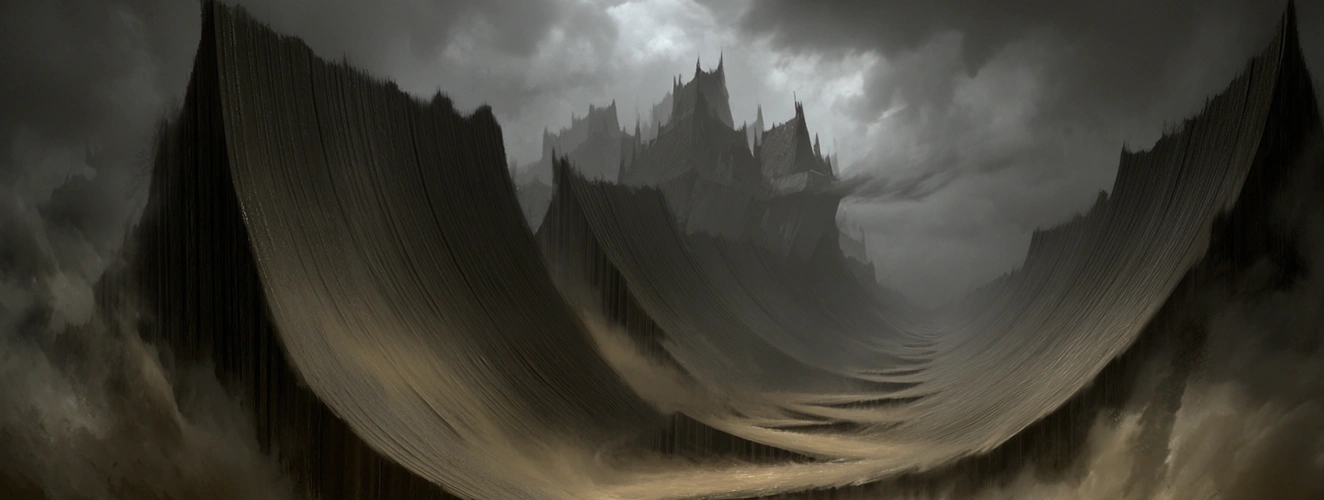
The Power of Fantasy: Advanced Critical Writing and Analysis
Course Description
Is fantasy really just an “escape” from reality, or might it actually provide us new ways of understanding and reimaging our world and our sense of self? From literature and film to the visual and performing arts, fantasy remains one of the most powerful and popular forms. Where does this power come from?
This intensive course in advanced critical writing at the collegiate level will offer a chance to analyze great works of fantasy, think through these questions, and craft nuanced essays that explore the meaning and power of fantasy. We will read literary works including stories by Jorge Luis Borges, Ursula K. Le Guin, HP Lovecraft, and Nnedi Okorafor alongside an overlooked but exciting novel by pre-Harlem Renaissance writer Pauline Hopkins; we will watch and discuss films spanning from The Lord of the Rings and Indiana Jones to The Black Panther and Inception; we will analyze visual art, including the imaginary realms of Surrealism; and we will investigate the construction of immersive fantasy spaces, from the highly commericial (like Disneyland) to “alternative” spaces (like Burning Man or Meow Wolf).
In our writing sessions, students will work in small groups to develop and refine the techniques of writing and revision that allow you to transform your ideas and insights into powerful essays, using rhetorical instruction materials and workshops that replicate the intensive writing seminars taken by University of Chicago undergraduates.
Academic Interest
Examining Culture and Society, Humanities (e.g, arts, literature, philosophy)
Application Materials
A complete application includes a transcript, two short essays, a letter of recommendation, writing sample, application fee, and a submitted parent confirmation. If you are seeking need-based financial aid, you must indicate that in your application before it is submitted. Please refer to the Application Instructions for complete details.
Instructor(s)
Michael Subialka
Cost
$9,300
Other Courses to Consider
These courses might also be of interest.
 Democracy Against Itself: From Antiquity to Modernity
How can we make sense of the global democratic crisis that dominates today’s headlines? What do the historical and political transformations of democracy, from its ancient beginnings to its modern forms, reveal about our current moment? Across the United States, Europe, Asia, and the Middle East, democratic institutions seem increasingly fragile, with widespread discontent impacting public life. Whereas the ancients related to democracy in more direct terms, its modern trajectory has been marked by paradoxes obscuring our understanding of democratic ideals.
This course traces the history of democracy from its origins in classical antiquity to its transformations with the rise of modern society. Starting with Ancient Greece, we examine the ideals and shortcoming of Athenian democracy through Aristotle’s Politics, Thucydides’ account of the Peloponnesian War, and Aristophanes’ comic critiques. We will then focus on the emergence of bourgeois democracy in the age of revolutions, with close readings of the American Declaration of Independence, Alexis de Tocqueville’s Democracy in America, and key texts of the French Revolution to parse out the potential of democracy rooted in the ideals of equality and liberty. Finally, the course considers the rise and crisis of capitalist democracy, through the failed revolutions of 1848 and the emergence of mass society in the twentieth century to mark the problematic rise of nationalism and authoritarian democracy.
Residential Language, Culture, and Education: An Introduction
In this course, we examine past and current research about unequal educational achievement in US schools, with a focus on the role of language and culture in explaining student achievement.
We will examine myriad theories and research about differential educational achievement in US schools, including: (1) theories and research that focus on the characteristics of individuals and families, (2) theories and research that focus on the characteristics of culture and environments, and (3) theories and research that examine institutional characteristics, to understand how they shape educational opportunities and outcomes, especially for students from historically marginalized communities in the US.
Residential