

Forensic Biology: “Who done it?” – DNA tells the story
Course Code
BIOS 11142 20
Course Description
This course is designed to introduce the field of forensic biology to those with an introductory biology background.
Starting with a brief overview of relevant basic concepts of molecular biology, genetics, and inheritance patterns, the course will explore the crucial role played by individuals’ unique DNA in precisely solving mysteries of missing people and crimes.
The course combines theoretical knowledge with hands-on experimentation to provide a comprehensive understanding of forensic biology with a focus on DNA analysis. We also cover adjacent topics such as identity-by-descent and the use of non-human DNA in Forensics, and also expand on the legal and ethical implications surrounding this form of investigation.
Upon completion, students will gain a comprehensive understanding of DNA analysis in forensic investigations, including the limitations in current practice. They will be empowered to contribute to the enhancement of criminal justice and public safety policies and guidelines.
Course Criteria
Prerequisites: BIOS 10130 or 10140.
NO BIOLOGICAL SCIENCES MAJORS AND NO NON-BIOLOGY PRE-MEDS, except by petition. This topics course fulfills the 2nd quarter of Core Biology.
Instructor(s)
Navneet Bhasin
Other Courses to Consider
These courses might also be of interest.
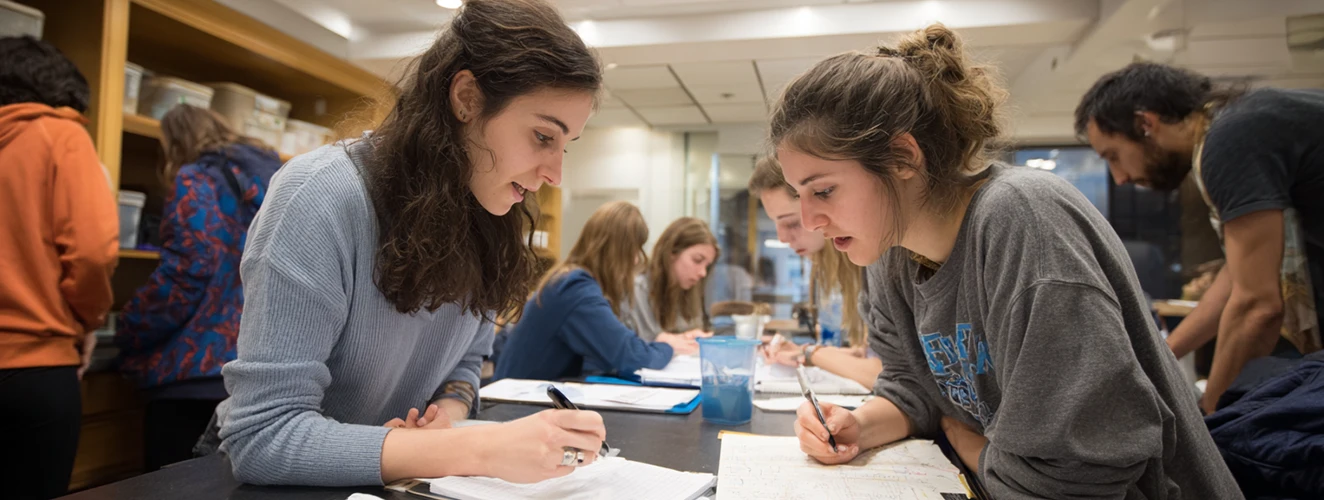 Inquiry-based Exploration of Biology
In this course students will be able to conduct their own research projects to experience how biologists frame questions and test hypotheses. This inquiry-based approach permits students to learn fundamental biological principles while carrying out scientific experiments and expanding our knowledge of living systems.
Classes will take place in the lab, integrating lectures, discussions, and experiments in active sessions, thus eliminating the separation between theory and practice.
Students will also have an opportunity to develop communication skills during the quarter, presenting their proposals and results to their peers and instructors. Each course instructor will focus their section on a different major problem in the biological sciences that will frame the students' research questions.
Residential Nutritional Science
This course examines the underlying biological mechanisms of nutrient utilization in humans and the scientific basis for setting human nutritional requirements. The relationships between food choices and human health are also explored.
Students consider how to assess the validity of scientific research that provides the basis for advice about how to eat healthfully.
Class assignments are designed to help students apply their knowledge by critiquing their nutritional lifestyle, nutritional health claims, and/or current nutrition policy issues.
Remote